Telesilla of Argos, a figure revered in both poetry and history, exemplifies extraordinary leadership and courage during a pivotal moment in ancient Greece. Flourishing in the 5th century BC, Telesilla's legacy intertwines her roles as a poet and a defender of her city.
Telesilla's leadership came to prominence when Argos faced dire threats from Cleomenes and Spartan forces in 494 BC. With the male population depleted by war, Telesilla rallied the women of Argos. Despite their lack of military training, these women courageously took up arms, defending their city's walls against the invading Spartans. Their bravery and determination not only thwarted Cleomenes' advances but also safeguarded Argos from falling into enemy hands.
Beyond her military prowess, Telesilla's literary contributions also left an indelible mark. Despite only a few fragments of her poetry surviving, Telesilla was recognized among the Nine Female Lyric Poets of Greece. Her surviving works, including references to gods like Apollo and Artemis, reflect her devotion to both her craft and her cultural heritage. Notably, the Telesillan metre, named in her honor, underscores her influence on poetic form in ancient Greece.
Throughout history, Telesilla's achievements have resonated, inspiring admiration and commemoration. Antipater of Thessalonica included her among distinguished women poets, underscoring her enduring fame in antiquity. In the 20th century, her legacy continued to inspire artistic expression, notably influencing poets like Hilda Doolittle.
Telesilla's dual role as a defender and a poet illustrates her multifaceted contribution to Greek society. Her courage in times of crisis and her artistic expression endure as symbols of resilience and creativity. Telesilla's story reminds us of the lasting impact of determined leadership and cultural influence, making her a timeless figure in both history and literature.
Telesilla of Argos: Leader, Poet, and Defender
Showing posts with label poet. Show all posts
Showing posts with label poet. Show all posts
Monday, July 15, 2024
Saturday, January 21, 2023
Eratosthenes of Cyrene - Greek astronomer, geographer and mathematician
Eratosthenes (c. 276 BC – c. 195/194 BC), the ancient Greek scholar is called the ‘father of geography. He was the first one to use the word geography. He invented a system of longitude and latitude and made a map of the known world.
More than 2,000 years ago Eratosthenes compared the position of the Sun’s rays in two locations to calculate the spherical size of the Earth with reasonable accuracy.
He was a native of Cyrene, North Africa As a young man, he traveled to Athens to pursue his studies. His teachers included the scholar Lysanias of Cyrene and the philosopher Ariston of Chios who had studied under Zeno, the founder of the Stoic school of philosophy.
He returned to Cyrene and made such a name for himself in scholarly endeavors that the Greek ruler of Egypt brought him to Alexandria to tutor his son.
When the chief librarian of the famous Library of Alexandria died in 236 BCE, Eratosthenes was appointed to the prominent position around the age of 40. The library is said to have contained hundreds of thousands of papyrus and vellum scrolls.
Eratosthenes remained in Alexandria for the rest of his life, and it was there he made his calculations regarding the circumference of the earth and wrote his best-known works, including a three-volume set on geography credited with coining that term.
Eratosthenes tried to fix the dates of literary and political events since the siege of Troy. His writings included a poem inspired by astronomy, as well as works on the theatre and on ethics.
One of the important works of Eratosthenes was Platonicus which dealt with the mathematics which underlie Plato's philosophy. This work was heavily used by Theon of Smyrna when he wrote Expositio rerum mathematicarum.
Eratosthenes’ only surviving work is Catasterisms, a book about the constellations, which gives a description and story for each constellation, as well as a count of the number of stars contained in it.
Eratosthenes of Cyrene - Greek astronomer, geographer and mathematician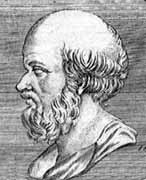
More than 2,000 years ago Eratosthenes compared the position of the Sun’s rays in two locations to calculate the spherical size of the Earth with reasonable accuracy.
He was a native of Cyrene, North Africa As a young man, he traveled to Athens to pursue his studies. His teachers included the scholar Lysanias of Cyrene and the philosopher Ariston of Chios who had studied under Zeno, the founder of the Stoic school of philosophy.
He returned to Cyrene and made such a name for himself in scholarly endeavors that the Greek ruler of Egypt brought him to Alexandria to tutor his son.
When the chief librarian of the famous Library of Alexandria died in 236 BCE, Eratosthenes was appointed to the prominent position around the age of 40. The library is said to have contained hundreds of thousands of papyrus and vellum scrolls.
Eratosthenes remained in Alexandria for the rest of his life, and it was there he made his calculations regarding the circumference of the earth and wrote his best-known works, including a three-volume set on geography credited with coining that term.
Eratosthenes tried to fix the dates of literary and political events since the siege of Troy. His writings included a poem inspired by astronomy, as well as works on the theatre and on ethics.
One of the important works of Eratosthenes was Platonicus which dealt with the mathematics which underlie Plato's philosophy. This work was heavily used by Theon of Smyrna when he wrote Expositio rerum mathematicarum.
Eratosthenes’ only surviving work is Catasterisms, a book about the constellations, which gives a description and story for each constellation, as well as a count of the number of stars contained in it.
Eratosthenes of Cyrene - Greek astronomer, geographer and mathematician


Saturday, November 12, 2022
Telesilla of Argos
Telesilla, (flourished 5th century BC, Argos), was an famous ancient female Greek poet. She wrote lyric poetry dedicated to Apollo and Artemis, of which only brief fragments remain.
She was listed by Antipater of Thesalonike (c. 15 BC) as one of the great Nine Female Lyric Poets of Greece (along with Praxilla, Moiro, Anyte, Sappho, Erinna, Corinna, Nossis, and Myrtis).
She was involved in the education of girls for choral performance. While she was famous during her life for her poetry, she was equally respected by later writers for driving the Spartan forces from her home city of Argos in 494/493 BC.
Argos was probably the base of Dorian operations in the Peloponnese (c. 1100-1000 BC), and from that time onward it was the dominant city-state of Argolis. During the Battle of Sepeia, the Spartan king Cleomenes made short work of the Argive forces and marched on Argos itself, where Telesilla reportedly stirred up her countrywomen to defend the walls.
According to Pausanias, Cleomenes had three options; 1- to attack the city and be defeated by women, which would be the greatest disgrace, 2- to attack and defeat the women, which would be a dishonourable victory or 3- to leave and save his honour. Frustrated, Cleomenes chose the third option and withdrew his forces and left the city untouched.
Telesilla of Argos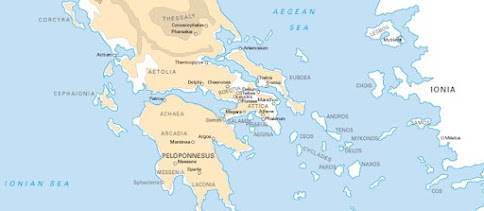
She was listed by Antipater of Thesalonike (c. 15 BC) as one of the great Nine Female Lyric Poets of Greece (along with Praxilla, Moiro, Anyte, Sappho, Erinna, Corinna, Nossis, and Myrtis).
She was involved in the education of girls for choral performance. While she was famous during her life for her poetry, she was equally respected by later writers for driving the Spartan forces from her home city of Argos in 494/493 BC.
Argos was probably the base of Dorian operations in the Peloponnese (c. 1100-1000 BC), and from that time onward it was the dominant city-state of Argolis. During the Battle of Sepeia, the Spartan king Cleomenes made short work of the Argive forces and marched on Argos itself, where Telesilla reportedly stirred up her countrywomen to defend the walls.
According to Pausanias, Cleomenes had three options; 1- to attack the city and be defeated by women, which would be the greatest disgrace, 2- to attack and defeat the women, which would be a dishonourable victory or 3- to leave and save his honour. Frustrated, Cleomenes chose the third option and withdrew his forces and left the city untouched.
Telesilla of Argos

Thursday, February 8, 2018
Abu ʾl-Qasim Ferdowsi Tusi (c. 940–1020)
Ferdowsi is the pseudonym of the Persian poet Hakim Abu ʾl-Qasim Ferdowsi Tusi. He was born and grew up in a family of Persian landowners in Paj of Tus—somewhere near today's Mashad, the capital city of the Iranian province of Khurasan. He is the author of the Shah-nameh, the national epic of Iran.
 To the ancient Greeks, Tus was known as Susia. Having a son died at age 37, Ferdowsi's wife was most likely literate and came from the same dehqan class. Dehqan is a meber of the indigenous land aristocracy.
Ferdowsi became a landowner and received a comfortable income from his estates. But his income was not sufficient to provide for his daughter’s future, so Ferdowsi decided to write an epic for the sultan. He hoped to be paid handsomely for this task, which occupied him for more than thirty years.
The Shah-nameh was written for the court of the Samanid princes of Khorasan. The poem was based mainly on a prose work called the Khavatay-namak. The Shah-nameh chronicles the legendary history of the pre-Islamic kings of Iran from Keyumars, the first Shah of the world in 2600 BC to Yazdegerd III.
Abu ʾl-Qasim Ferdowsi Tusi (c. 940–1020)

Ferdowsi became a landowner and received a comfortable income from his estates. But his income was not sufficient to provide for his daughter’s future, so Ferdowsi decided to write an epic for the sultan. He hoped to be paid handsomely for this task, which occupied him for more than thirty years.
The Shah-nameh was written for the court of the Samanid princes of Khorasan. The poem was based mainly on a prose work called the Khavatay-namak. The Shah-nameh chronicles the legendary history of the pre-Islamic kings of Iran from Keyumars, the first Shah of the world in 2600 BC to Yazdegerd III.
Abu ʾl-Qasim Ferdowsi Tusi (c. 940–1020)
Wednesday, April 19, 2017
Horace: World's first autobiographer
Quintus Horatius Flaccus (December 8, 65 BC – November 27, 8 BC) was born at the city of Apulia.
His father was a propertied freedman of a small farm in the vicinity of that place from which he afterwards removed to Rome, when his son had attained the age of nine or ten years in order to afford him the benefits of a liberal education.
 About the age of twenty-one, Horace was sent to Athens to complete his education. Horace was 21 when the assassination of Julius Caesar precipitated 17 years of civil war. In 44 BC he joined Brutus’ faction and in 42 he fought as an officer at the battle of Philippi, where Brutus was defeated.
When Horace returned to Rome in 41 BC his land had been confiscated. He joined the civil service and forced by poverty, turned to writing. He became a friend of Virgil and in 38 BC met Maecenas, who became his patron. Horace rose to be the supreme lyric poet of his time.
Augustus courted Horace’s friendship. The emperor Augustus gave him a farm in the Sabine hills.
The works of Horace are numerous, displaying a knowledge of philosophy, vast vocabulary and a reliance upon common sense.
Satires 1 (c. 35–34 BC)
Satires 2 (c. 30 BC)
Epodes (30 BC)
Odes 1–3 (c. 23 BC)
Epistles 1 (c. 21 BC)
Carmen Saeculare (17 BC)
Epistles 2 (c. 11 BC)
Odes 4 (c. 11 BC)
Ars Poetica (c. 10–8 BC)
Horace: World's first autobiographer
His father was a propertied freedman of a small farm in the vicinity of that place from which he afterwards removed to Rome, when his son had attained the age of nine or ten years in order to afford him the benefits of a liberal education.
When Horace returned to Rome in 41 BC his land had been confiscated. He joined the civil service and forced by poverty, turned to writing. He became a friend of Virgil and in 38 BC met Maecenas, who became his patron. Horace rose to be the supreme lyric poet of his time.
Augustus courted Horace’s friendship. The emperor Augustus gave him a farm in the Sabine hills.
The works of Horace are numerous, displaying a knowledge of philosophy, vast vocabulary and a reliance upon common sense.
Satires 1 (c. 35–34 BC)
Satires 2 (c. 30 BC)
Epodes (30 BC)
Odes 1–3 (c. 23 BC)
Epistles 1 (c. 21 BC)
Carmen Saeculare (17 BC)
Epistles 2 (c. 11 BC)
Odes 4 (c. 11 BC)
Ars Poetica (c. 10–8 BC)
Horace: World's first autobiographer
Monday, June 27, 2016
Virgil
Publius Vergilius Maro, usually called Virgil was Rome’s greatest poet producing in Latin the great epic poem the Aeneid, the well-known epic poem of twelve books that became the Roman Empire’s national epic. Virgil became the archetype of future poets well into the Renaissance.
Virgil was born on the 15th of October 70 BC at Andes, a little village near Mantua. His mother’s name was Maia, and his father was probably a small landowner.
Virgil learned country ways in his father’s pottery shop and form anima husbandry, beekeeping and lumbering. At the age 17, he enrolled on oratory and law at Marcus Epidius’s school in Rome, where the young Octavian and Mark Antony had studied.

Virgil wrote three major works, the Eclogues published I 37 BC, which brought him to the literacy circle of Horace, Pollio, Maecenas and ultimately Octavian (Augustus).
In 37 BC, he and Horace traveled together to southern Italy when he began work on his second major work with Georgics, published in 29 BC.
Then he immediately began work on his third and greatest work, the Aeneid which was unfinished at the time of his death in 19 BC at Brundusium. Until his death at the 51, Virgil labored on the Aeneid, a nationalistic paean to the Trojan prince Aeneas and to Rome’s foundations.
Virgil
Virgil was born on the 15th of October 70 BC at Andes, a little village near Mantua. His mother’s name was Maia, and his father was probably a small landowner.
Virgil learned country ways in his father’s pottery shop and form anima husbandry, beekeeping and lumbering. At the age 17, he enrolled on oratory and law at Marcus Epidius’s school in Rome, where the young Octavian and Mark Antony had studied.

Virgil wrote three major works, the Eclogues published I 37 BC, which brought him to the literacy circle of Horace, Pollio, Maecenas and ultimately Octavian (Augustus).
In 37 BC, he and Horace traveled together to southern Italy when he began work on his second major work with Georgics, published in 29 BC.
Then he immediately began work on his third and greatest work, the Aeneid which was unfinished at the time of his death in 19 BC at Brundusium. Until his death at the 51, Virgil labored on the Aeneid, a nationalistic paean to the Trojan prince Aeneas and to Rome’s foundations.
Virgil
Subscribe to:
Posts (Atom)
The most popular posts
-
 The copy of "Keys of Mercy and Secrets of Wisdom" under consideration was written in two parts designated, "Part One, I...
 -
 Gaius Sallustius Crispus, commonly known as Sallust, was a Roman historian and politician born around 86 BC in Amiternum, a town in the Sabi...
 -
 Hunayn ibn Ishaq al-Abadi (808-873 A.D.) was a prominent Arab scholar, physician, and translator during the Islamic Golden Age. Born in al-H...
 -
 Marcus Terentius Varro (116–27 BC) stands as one of ancient Rome’s most accomplished scholars, widely regarded for his extraordinary intelle...
 -
 Peter Abelard (1079–1142), born in Le Pallet near Nantes, France, remains one of the most compelling figures of medieval intellectual histor...

