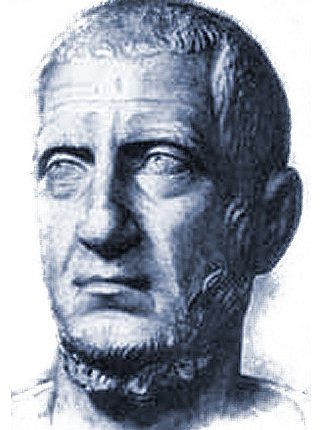
Gaius Sallustius Crispus, commonly known as Sallust, was a Roman historian and politician born around 86 BC in Amiternum, a town in the Sabine region of Italy. His historical works provide valuable insights into the political and social dynamics of the late Roman Republic, a period marked by internal strife, corruption, and the erosion of traditional values.
Sallust began his political career as a tribune of the plebs in 52 BC, an office that allowed him to advocate for the common people and oppose the senatorial elite. He gained a reputation for his sharp criticism of the corruption and moral decay that plagued Roman society. However, his political career was not without controversy. In 50 BC, he was expelled from the Senate, likely due to accusations of immorality and political maneuvering. Some scholars suggest that his opposition to the aristocracy made him a target for his political rivals. Despite this setback, Sallust remained a loyal supporter of Julius Caesar, joining him during the Civil War and playing a role in Caesar's African campaign against the remnants of Pompey's forces.
As a reward for his loyalty, Caesar appointed Sallust as governor of the newly formed province of Africa Nova in 46 BC. However, his tenure was marred by allegations of extortion and corruption, reinforcing the very issues he had criticized in others. After Caesar’s assassination in 44 BC, Sallust retired from public life and dedicated himself to writing, producing some of the most significant historical texts of the era.
His most famous works, "Bellum Catilinae" (The War of Catiline) and "Bellum Jugurthinum" (The Jugurthine War), provide a critical perspective on the political events and figures of his time. "Histories," though only partially surviving, aimed to cover the history of Rome following the death of Sulla. Influenced by the Greek historian Thucydides, Sallust’s style is characterized by conciseness, moral reflection, and dramatic narrative, making his works both engaging and instructive.
Sallust died around 35 BC, leaving behind a legacy as one of Rome’s earliest and most influential historians. His works continue to be studied for their historical value and literary merit, offering timeless reflections on power, ambition, and corruption.
Sallust: Historian and Critic of Rome’s Decline
Showing posts with label historian. Show all posts
Saturday, February 15, 2025
Thursday, August 24, 2023
Ammianus Marcellinus: Roman Historian
Ammianus Marcellinus, born approximately in 330 AD and living beyond 390 AD, was a Greek native who served within the ranks of the Roman military. He was born in the Eastern Mediterranean, potentially in areas such as Syria or Phoenicia, to an affluent Greek family. He grew up acquiring proficiency in both the Greek and Latin languages. Around 350 AD, he gained entry into the respected group of protectores domestici and became a member of General Ursicinus' staff.
He took part in the Roman campaign in Mesopotamia and was involved in the events at Amida in the year 359. Four years later, he participated in battles against the Persians alongside Emperor Julian and played a role in the subsequent retreat led by Emperor Jovian. Following his departure from the military in Antioch, he embarked on voyages to Egypt and Greece before eventually finding his settled place in Rome.
Thanks to his position as a protector, he enjoyed advantageous access to primary information. This information could be gleaned from direct discussions with Ursicinus and other military figures, or from reports compiled by the staff, drawing from the accounts of scouts, spies, or deserters.
While residing in Rome, he penned the "Res gestae," a historical record of the Roman Empire that spans from Emperor Nerva's ascension in 96 AD to the downfall of Valens at the Battle of Adrianople in 378 AD. This work potentially served as a continuation of the historical narrative initiated by Tacitus. He completed a total of thirty-one books, yet only thirteen of these have endured through time to the present day.
Ammianus Marcellinus: Roman Historian
He took part in the Roman campaign in Mesopotamia and was involved in the events at Amida in the year 359. Four years later, he participated in battles against the Persians alongside Emperor Julian and played a role in the subsequent retreat led by Emperor Jovian. Following his departure from the military in Antioch, he embarked on voyages to Egypt and Greece before eventually finding his settled place in Rome.
Thanks to his position as a protector, he enjoyed advantageous access to primary information. This information could be gleaned from direct discussions with Ursicinus and other military figures, or from reports compiled by the staff, drawing from the accounts of scouts, spies, or deserters.
While residing in Rome, he penned the "Res gestae," a historical record of the Roman Empire that spans from Emperor Nerva's ascension in 96 AD to the downfall of Valens at the Battle of Adrianople in 378 AD. This work potentially served as a continuation of the historical narrative initiated by Tacitus. He completed a total of thirty-one books, yet only thirteen of these have endured through time to the present day.
Ammianus Marcellinus: Roman Historian
Labels:
Ammianus Marcellinus,
historian,
Roman
Thursday, December 8, 2022
Dionysius of Halicarnassus
Dionysius of Halicarnassus was a Greek historian and teacher of rhetoric, who flourished during the reign of Augustus Caesar. Dionysius of Halicarnassus was born before 53 BC.
He had come to Italy at the time when Augustus Caesar put an end to the civil war in the middle of the 187th Olympiad (the late in 30 BC). He had spent the following twenty years in acquiring himself with language and the literature of the Romans, in gathering his material an in writing his history. He lived there until his death sometime after 8 BC.
His literary style was Atticistic – imitating the classical Greek of Herodotus. His work called Rhōmaïke archaiologia (Roman Antiquities), which describes the history of Rome from the mythical period to the beginning of the first Punic war.
Punic wars were fought between ancient Carthage (present Tunisia) and roman republic between 264 to 46 BC. His Roman Antiquities began to appear in 7 BC.
Dionysius of Halicarnassus
He had come to Italy at the time when Augustus Caesar put an end to the civil war in the middle of the 187th Olympiad (the late in 30 BC). He had spent the following twenty years in acquiring himself with language and the literature of the Romans, in gathering his material an in writing his history. He lived there until his death sometime after 8 BC.
His literary style was Atticistic – imitating the classical Greek of Herodotus. His work called Rhōmaïke archaiologia (Roman Antiquities), which describes the history of Rome from the mythical period to the beginning of the first Punic war.
Punic wars were fought between ancient Carthage (present Tunisia) and roman republic between 264 to 46 BC. His Roman Antiquities began to appear in 7 BC.
Dionysius of Halicarnassus
Labels:
Dionysius of Halicarnassus,
historian,
Roman
Thursday, June 2, 2022
Greek historian -Diocles of Peparethus
Flourished during late 4th – early 3rd century BC, Diocles of Peparethus a historian from the Greek island of Peparethus.
He wrote about the foundation of Rome, and whom Q. Fabius Pictor is said to have followed in a great many points.
It is the generally accepted view that Fabius Pictor found the narrative structure of this foundation story in the work of Diocles of Peparethus. Regarding th mythical founder Romulus, Diocles relied heavily on local Italic folk tales and the concept of an original single founder, a storyline habitual in the histories of the Wetsern Greek writers of his time.
Diocles of Peparethus appears to have been a figure of note, well-travelled, and abstemious; Athenaeus cites Demetrius of Scepsis to attest that Diocles "drank cold water to the day of his death".
Greek historian -Diocles of Peparethus
He wrote about the foundation of Rome, and whom Q. Fabius Pictor is said to have followed in a great many points.
It is the generally accepted view that Fabius Pictor found the narrative structure of this foundation story in the work of Diocles of Peparethus. Regarding th mythical founder Romulus, Diocles relied heavily on local Italic folk tales and the concept of an original single founder, a storyline habitual in the histories of the Wetsern Greek writers of his time.
Diocles of Peparethus appears to have been a figure of note, well-travelled, and abstemious; Athenaeus cites Demetrius of Scepsis to attest that Diocles "drank cold water to the day of his death".
Greek historian -Diocles of Peparethus
Labels:
Diocles of Peparethus,
Greek,
historian
Saturday, January 29, 2022
Plutarch - The Greek biographer, historian, essayist, and moralist
Lucius Mestrius Plutarchus, better known simply as Plutarch, was a Greek writer and philosopher who lived between c. 45-50 AD and c. 120-125 AD.
Plutarch was born in Chaeronea, a city of Boeotia in central Greece around 45–47 AD to an ancient aristocratic Theban family. He began studying at Athens with a Platonist philosopher named Ammonius.
Plutarch is believed to have had a liberal education at Athens, where he studied physics, rhetoric, mathematics, medicine, natural science, philosophy, Greek, and Latin literature.
Although Plutarch visited Athens often, studying their philosophy under Ammonius, and he travelled to both Alexandria in Egypt and Italy, he spent most of his life in his native city and in nearby Delphi.
He lived in his own golden age, during the reigns of Nerva, Trajan and Hadrian. The author of more than 200 works, he is known primarily for his Parallel Lives, biographies that over the centuries have heavily shaped popular ideas of Greek and Roman history.
Plutarch paid special attention to “physics,”, which in antiquity included metaphysics, natural philosophy, psychology and theology.
Plutarch - The Greek biographer, historian, essayist, and moralist
Plutarch was born in Chaeronea, a city of Boeotia in central Greece around 45–47 AD to an ancient aristocratic Theban family. He began studying at Athens with a Platonist philosopher named Ammonius.
Plutarch is believed to have had a liberal education at Athens, where he studied physics, rhetoric, mathematics, medicine, natural science, philosophy, Greek, and Latin literature.
Although Plutarch visited Athens often, studying their philosophy under Ammonius, and he travelled to both Alexandria in Egypt and Italy, he spent most of his life in his native city and in nearby Delphi.
He lived in his own golden age, during the reigns of Nerva, Trajan and Hadrian. The author of more than 200 works, he is known primarily for his Parallel Lives, biographies that over the centuries have heavily shaped popular ideas of Greek and Roman history.
Plutarch paid special attention to “physics,”, which in antiquity included metaphysics, natural philosophy, psychology and theology.
Plutarch - The Greek biographer, historian, essayist, and moralist
Labels:
Greek,
historian,
philosopher,
Plutarch
Wednesday, December 8, 2021
Gaius Acilius – earliest Roman annalist
Acilius, Gaius Roman senator of plebeian descent and historian, who work for three Greek scholars, Carneades, Diogenes, and Critolaus in the senate in 155 BC. At that session he acted as interpreter.
He wrote a history of Rome. The work extended from pre-history down to the writer’s own time, 184 BC. Acilius takes for granted that Rome was a Greek colony. He wrote in Greek in order to parade Roman achievement before the Greek world.
His work was reproduced in Latin by Claudius Quadrigarius, who would then have incorporated it in his annalistic form.
Gaius Acilius – earliest Roman annalist
He wrote a history of Rome. The work extended from pre-history down to the writer’s own time, 184 BC. Acilius takes for granted that Rome was a Greek colony. He wrote in Greek in order to parade Roman achievement before the Greek world.
His work was reproduced in Latin by Claudius Quadrigarius, who would then have incorporated it in his annalistic form.
Gaius Acilius – earliest Roman annalist
Labels:
Gaius Acilius,
historian,
Roman
Monday, June 7, 2021
Procopius of Caesarea
Procopius of Caesarea (fl. 527 – 554), the most important of the Byzantine historians, was born in the city of Caesarea in Palestine towards the beginning of the sixth century of the Christian era. Caesarea had been one of the pre-eminent centers of learning in the Roman Empire during the fourth century.
After having for some time practiced as a “Rhetorician,” that is, advocate or jurist, in his native land, he seems to have migrated early to Byzantium or Constantinople.
There he gave lessons in elocution, and acted as counsel in several law-cases. His talents soon attracted attention, and he was promoted to official duties in the service of the State. He was commissioned to accompany the famous Belisarius during his command of the army in the East, in the capacity of Counsellor or Assessor.
Procopius was on Belisarius's first Persian campaign, and later took part in an expedition against the Vandals. He was in Italy on the Gothic campaign until 540, after which he lived in Constantinople, since he describes the great plague of 542 in the capital.
Procopius would remain in the employ of the Roman government through at least 554, at which point the historian fades from the historical record.
He is the author of three major historical works: the History of the Wars, the Anecdota, and Buildings. The world of Justinian and Procopius was one of rapid, unsettling change as the Roman Empire evolved into something new.
Procopius of Caesarea composed a record of the wars which Justinian, the emperor of the Romans, waged against the barbarians of the east and of the west.
His chief work in “Histories,” in eight books: two on the Persian wars (408-553), two on the Vandal wars (395-545), and four on the Gothic wars, bringing down the narrative to the beginning of 559.
Procopius provides an ample record for the historian, narrating the momentous events of Justinian’s reign: however, his voice is inflected by his antiquarianism and a disapproval of innovation verging on the reactionary.
Procopius also composed De Aedificiis (on Buildings) around 554 AD. The purpose is to glorify the reigning emperor Justinian as a master builder and imperial patron, it does also present a compendium of significant building activities throughout the extent of the sixth-century Mediterranean world.
Procopius of Caesarea
After having for some time practiced as a “Rhetorician,” that is, advocate or jurist, in his native land, he seems to have migrated early to Byzantium or Constantinople.
There he gave lessons in elocution, and acted as counsel in several law-cases. His talents soon attracted attention, and he was promoted to official duties in the service of the State. He was commissioned to accompany the famous Belisarius during his command of the army in the East, in the capacity of Counsellor or Assessor.
Procopius was on Belisarius's first Persian campaign, and later took part in an expedition against the Vandals. He was in Italy on the Gothic campaign until 540, after which he lived in Constantinople, since he describes the great plague of 542 in the capital.
Procopius would remain in the employ of the Roman government through at least 554, at which point the historian fades from the historical record.
He is the author of three major historical works: the History of the Wars, the Anecdota, and Buildings. The world of Justinian and Procopius was one of rapid, unsettling change as the Roman Empire evolved into something new.
Procopius of Caesarea composed a record of the wars which Justinian, the emperor of the Romans, waged against the barbarians of the east and of the west.
His chief work in “Histories,” in eight books: two on the Persian wars (408-553), two on the Vandal wars (395-545), and four on the Gothic wars, bringing down the narrative to the beginning of 559.
Procopius provides an ample record for the historian, narrating the momentous events of Justinian’s reign: however, his voice is inflected by his antiquarianism and a disapproval of innovation verging on the reactionary.
Procopius also composed De Aedificiis (on Buildings) around 554 AD. The purpose is to glorify the reigning emperor Justinian as a master builder and imperial patron, it does also present a compendium of significant building activities throughout the extent of the sixth-century Mediterranean world.
Procopius of Caesarea
Labels:
Emperor Justinian,
historian,
Procopius of Caesarea,
Roman
Monday, May 24, 2021
Quintus Fabius Pictor: Roman Historian
Quintus Fabius Pictor born 270 bc (flourished c. 200 BC) was one of the earliest Roman prose historians.
Fabius used the records of his own and other important Roman families as sources, and began with the arrival of Aeneas in Latium. His work ended with his own recollections of the Second Punic War.
A member of the Senate, Fabius Pictor fought in the Gallic War of 225 BC and that he was sent by the senate to Delphi in 216 BC to consult the oracle after disaster at Cannae.
The first history of Rome was written in Greek by Q. Fabius Pictor at the close of the third century BC. According to Plutarch, that Fabius’ source for the Romulus and Remus story was a Greek historian called Diocles of Peparethus (Life of Romulus, 3.1), and the great historian of Western Greece and Sicily, Timaeus of Tauromenium, had incorporated a good deal of material about Rome’s mythical past in his Histories of c. 280 BC.
Quintus Fabius Pictor: Roman Historian
Fabius used the records of his own and other important Roman families as sources, and began with the arrival of Aeneas in Latium. His work ended with his own recollections of the Second Punic War.
A member of the Senate, Fabius Pictor fought in the Gallic War of 225 BC and that he was sent by the senate to Delphi in 216 BC to consult the oracle after disaster at Cannae.
The first history of Rome was written in Greek by Q. Fabius Pictor at the close of the third century BC. According to Plutarch, that Fabius’ source for the Romulus and Remus story was a Greek historian called Diocles of Peparethus (Life of Romulus, 3.1), and the great historian of Western Greece and Sicily, Timaeus of Tauromenium, had incorporated a good deal of material about Rome’s mythical past in his Histories of c. 280 BC.
Quintus Fabius Pictor: Roman Historian
Labels:
historian,
Quintus Fabius Pictor,
Roman
Monday, January 25, 2021
Lucius Cincius Alimentus: Roman annalist and jurist
Lucius Cincius Alimentus was a plebeian senator and one of Rome's earliest historians. From a plebeian family, Cincius participated late in the Second Punic War in a variety of capacities.
He was praetor in Sicily in 210/9 BC, a title granted by the government of Ancient Rome to men acting in one of two official capacities. As a Roman senator, his most important legislation was the Cincian Law, which forbade the acceptance of payment for legal services.
Cincius was captured by Hannibal in one of the early battles of the Second Punic War.
His family most likely obtained membership in the Senate only in the troubled years of the Hannibalic War (218–201 BCE), and only for a short period of time.
His history of Rome, written in Greek, set the foundation of the city in 729–728 BC and reached his own times. With the work of Quintus Fabius Pictor, it formed the basis of the senatorial historical tradition, especially of the Second Punic War.
Dionysius also named Cincius as one of the earliest historians of Rome. According to Dionysius, Cincius‘ history, much like Pictor‘s, related both ancient and more recent events. Cincius dealt only cursorily with events further removed. Few fragments, only thirteen, of Cincius‘ history survive.
Lucius Cincius Alimentus: Roman annalist and jurist
He was praetor in Sicily in 210/9 BC, a title granted by the government of Ancient Rome to men acting in one of two official capacities. As a Roman senator, his most important legislation was the Cincian Law, which forbade the acceptance of payment for legal services.
Cincius was captured by Hannibal in one of the early battles of the Second Punic War.
His family most likely obtained membership in the Senate only in the troubled years of the Hannibalic War (218–201 BCE), and only for a short period of time.
His history of Rome, written in Greek, set the foundation of the city in 729–728 BC and reached his own times. With the work of Quintus Fabius Pictor, it formed the basis of the senatorial historical tradition, especially of the Second Punic War.
Dionysius also named Cincius as one of the earliest historians of Rome. According to Dionysius, Cincius‘ history, much like Pictor‘s, related both ancient and more recent events. Cincius dealt only cursorily with events further removed. Few fragments, only thirteen, of Cincius‘ history survive.
Lucius Cincius Alimentus: Roman annalist and jurist
Labels:
historian,
Lucius Cincius Alimentus,
Roman
Thursday, June 7, 2018
Scylax of Caryanda
Scylax of Caryanda (in Caria), Greek historian, lived in the time of Darius Hystaspis (521‑485 B.C.), who commissioned him to explore the course of the Indus. He was engaged to sail, explore and describe the shore of the Indian Ocean for the needs of the Persian.
Scylax of Caryanda was a pioneer in two ways; he wrote the first Indian logos in Greek, and he was rumored to have visited India.
He started from Caspatyrus and is said by Herodotus to have reached the sea, whence he sailed west through the Indian Ocean to the Red Sea. The exploration of the Persian gulf and Indian ocean lasted for two years and it was finished around 515 BC.
An account of Scylax’s voyage may have been written and transmitted to later writer. Direct evidence of a written account of Scylax’s explorations comes from Aristotle. In the Politics,the philosopher quotes Scylaxas the source of the statement that in India “the kings are physically very different from their subjects, etc.”
Scylax allegedly completed some books after this voyage: the Periplous, the Periodos Gês, and the Events in the Time of Heracleides King of Mylasa. Few fragments of his Periplous about India remain. They discuss its landscape, plants, political constitution and peoples.
Scylax of Caryanda
Scylax of Caryanda was a pioneer in two ways; he wrote the first Indian logos in Greek, and he was rumored to have visited India.
He started from Caspatyrus and is said by Herodotus to have reached the sea, whence he sailed west through the Indian Ocean to the Red Sea. The exploration of the Persian gulf and Indian ocean lasted for two years and it was finished around 515 BC.
An account of Scylax’s voyage may have been written and transmitted to later writer. Direct evidence of a written account of Scylax’s explorations comes from Aristotle. In the Politics,the philosopher quotes Scylaxas the source of the statement that in India “the kings are physically very different from their subjects, etc.”
Scylax allegedly completed some books after this voyage: the Periplous, the Periodos Gês, and the Events in the Time of Heracleides King of Mylasa. Few fragments of his Periplous about India remain. They discuss its landscape, plants, political constitution and peoples.
Scylax of Caryanda
Saturday, February 18, 2017
Theopompus of Chios
Theopompus, an eminent Greek historian, was a native of the island of Chios, son of Damasistratus, and brother of Caucaius, the rhetorician.
He was born about 380 BC and instructed in rhetoric by Isocrates during his stay in Chios. Chios is the fifth largest of the Greek islands, situated in the Aegean Sea, 7 kilometers (4.3 mi) off the Anatolian coast.
Theopompus flourished in the reign of Alexander the Great. Theopompus’ work was known in some form by late anti-Atticist writers and lexicographers. Several of his fragments are taken from Stephanus of Byzantium (6th century AD).
Theopompus of Chios
He was born about 380 BC and instructed in rhetoric by Isocrates during his stay in Chios. Chios is the fifth largest of the Greek islands, situated in the Aegean Sea, 7 kilometers (4.3 mi) off the Anatolian coast.
Theopompus flourished in the reign of Alexander the Great. Theopompus’ work was known in some form by late anti-Atticist writers and lexicographers. Several of his fragments are taken from Stephanus of Byzantium (6th century AD).
Theopompus of Chios
Labels:
historian,
Isocrates,
Theopompus of Chios
Monday, December 19, 2016
Publius Cornelius Tacitus (56-117 CE)
Tacitus or Publius Cornelius Tacitus or Gaius Cornelius Tacitus) (ca. AD 56–ca. 117) was a Roman historian, politician, orator, biographer, and essayist.
A brilliant successor to the essayist Seneca the Younger, the statesman and chronicler Tacitus mirrored the compression and consciences of the Greek historian Thucydides. A member of the senatorial order at Rome under the early Roman Empire, he lived under a succession of emperors stretching from Nero through to the anti-senatorial Domitian.
Believed to have born in southern Italy or in southern Gaul, he was the son of the governor of Belgic Gaul. In year 77 he married the daughter of Agricola, the future governor of Britain.
After studying rhetoric and law, Tacitus exhibited the influence of the orator Cicero on his dignified speaking style. He advanced under the reign of Domitian (81-96) to the praetorship (88) and became consul under the emperor Nerva (96-98) in 97.
During consulship, Tacitus had survived the harsh time of Domitian, a period that saw the death of his father-in-law and a regime whose cultivated despotism left a major mark on his writings.
Sometime later he served as proconsular governor in Asia. He died a few years later perhaps early in the reign of Hadrian (117-138).
Tacitus is known primarily for four historical works:
Agricola is a biography of his father-in-law
Dialogus treats the decline of Roman oratory
Histories and Annals
Germania (98) consists of an ethnographical treatise on the people and customs of that region
The Histories and Annals, Tacitus’s major works, survive toady only in partial form -they covered the history of the early principate from the death of the first Emperor Augustus to the end of the reign of Domitian (14-96). The Histories and Annals is a fundamental literary source for the political history of the early empire.
Tacitus is regarded as perhaps the greatest historian and one of the greatest prose stylists to write in Latin.
Publius Cornelius Tacitus (56-117 CE)
A brilliant successor to the essayist Seneca the Younger, the statesman and chronicler Tacitus mirrored the compression and consciences of the Greek historian Thucydides. A member of the senatorial order at Rome under the early Roman Empire, he lived under a succession of emperors stretching from Nero through to the anti-senatorial Domitian.
Believed to have born in southern Italy or in southern Gaul, he was the son of the governor of Belgic Gaul. In year 77 he married the daughter of Agricola, the future governor of Britain.
| Publius Cornelius Tacitus |
During consulship, Tacitus had survived the harsh time of Domitian, a period that saw the death of his father-in-law and a regime whose cultivated despotism left a major mark on his writings.
Sometime later he served as proconsular governor in Asia. He died a few years later perhaps early in the reign of Hadrian (117-138).
Tacitus is known primarily for four historical works:
Agricola is a biography of his father-in-law
Dialogus treats the decline of Roman oratory
Histories and Annals
Germania (98) consists of an ethnographical treatise on the people and customs of that region
The Histories and Annals, Tacitus’s major works, survive toady only in partial form -they covered the history of the early principate from the death of the first Emperor Augustus to the end of the reign of Domitian (14-96). The Histories and Annals is a fundamental literary source for the political history of the early empire.
Tacitus is regarded as perhaps the greatest historian and one of the greatest prose stylists to write in Latin.
Publius Cornelius Tacitus (56-117 CE)
Labels:
historian,
politician,
Publius Cornelius Tacitus,
Roman,
Tacitus
Saturday, November 12, 2016
Apollodorus of Artemita (130-87 BC)
This Apollodorus hailed for Artemita which was founded in the Hellenistic age. Despite having long been part of the Parthian Empire, by his lifetime (around 100 BC) Artemita had retained its character as a Greek polis under the rule of the pro-Greek early Arsacrids.
He wrote a work in the called Parthica (on the Parthians) which is referred to by Strabo (geographer 64- 21 BC) and by Athenaeus, who mentions the fourth book of his work.
Parthica is a book about history of Parthian empire comprising at least four volumes. The only surviving parts are a fragment handed down by Athenaeus and several references by Strabo, who in addition, emphasizes the accuracy of Apollodorus’s reports about the Parthian empire.
Inscriptions provided evidence of lectures given by an itinerant orator or philosopher, while a library housed specialist literature on philosophy.
Aside from his use of secondary sources (Alexander historians, early geographers), Apollodorus is a value informant because of his own local investigations, such as the study of the municipal archives of Artemita and Seleucia and the informant he personally collected from his Greek compatriots, as well as merchants and travelers.
The book of Parthica which has got lost dealt not only with Parthia, but also with Bactrian Greeks which had been cut off from the rest of the Hellenistic world since the third century and their invasion in India.
According to Apollodorus of Artemita, the fertility of Bactria’s soil created for the Graeco- Bactrians the power that led them to undertake the conquest of India.
Apollodorus of Artemita (130-87 BC)
He wrote a work in the called Parthica (on the Parthians) which is referred to by Strabo (geographer 64- 21 BC) and by Athenaeus, who mentions the fourth book of his work.
Parthica is a book about history of Parthian empire comprising at least four volumes. The only surviving parts are a fragment handed down by Athenaeus and several references by Strabo, who in addition, emphasizes the accuracy of Apollodorus’s reports about the Parthian empire.
Inscriptions provided evidence of lectures given by an itinerant orator or philosopher, while a library housed specialist literature on philosophy.
Aside from his use of secondary sources (Alexander historians, early geographers), Apollodorus is a value informant because of his own local investigations, such as the study of the municipal archives of Artemita and Seleucia and the informant he personally collected from his Greek compatriots, as well as merchants and travelers.
The book of Parthica which has got lost dealt not only with Parthia, but also with Bactrian Greeks which had been cut off from the rest of the Hellenistic world since the third century and their invasion in India.
According to Apollodorus of Artemita, the fertility of Bactria’s soil created for the Graeco- Bactrians the power that led them to undertake the conquest of India.
Apollodorus of Artemita (130-87 BC)
Labels:
Appolodorus of Artemita,
author,
Greek,
historian
Thursday, October 6, 2016
Polybius (200 BC-118 BC)
He was Greek statesman and historian. Polybius was born at Megalopolis, Arcadia in southern Greece and one of the prominent states in the Achaean League. His father, a wealthy landowner, was an elected official of the Achaean League.
Polybius served the league as a diplomat and military officer. After Rome’s victory in the Macedonian War, Polybius was among one thousand prominent sentiments, who were taken to Rome as hostages. But soon he became a welcome guest and friend of grecophile leading citizen, especially of P. Cornelius Scipio Africanus.
When seventeenth years later the barely three hundred surviving Achaeans were finally allowed to return home, Polybius lingered with his Roman friends for five more years and Scipio took him with him on his military campaigns in Africa.
Polybius wrote a history of Rome from the First Punic War in 264 to the destruction of Carthage and Corinth in 146 in forty books. Originally, his aim was to explain for a Greek speaking audience Rome’s conquest of the Mediterranean during the half century from the Sound Punic War to the Third Macedonian War, but the later expanded the material to include the First Punic War.
In addition to his history, Polybius also wrote of life of Philopoemen ( a general of the Achaean League), a treatise on tactics and a history of the Numantine War. Polybius is not only the first Greek to tell about Rome but also predates all surviving historical texts written by Romans.
Polybius (200 BC-118 BC)
Polybius served the league as a diplomat and military officer. After Rome’s victory in the Macedonian War, Polybius was among one thousand prominent sentiments, who were taken to Rome as hostages. But soon he became a welcome guest and friend of grecophile leading citizen, especially of P. Cornelius Scipio Africanus.
When seventeenth years later the barely three hundred surviving Achaeans were finally allowed to return home, Polybius lingered with his Roman friends for five more years and Scipio took him with him on his military campaigns in Africa.
Polybius wrote a history of Rome from the First Punic War in 264 to the destruction of Carthage and Corinth in 146 in forty books. Originally, his aim was to explain for a Greek speaking audience Rome’s conquest of the Mediterranean during the half century from the Sound Punic War to the Third Macedonian War, but the later expanded the material to include the First Punic War.
In addition to his history, Polybius also wrote of life of Philopoemen ( a general of the Achaean League), a treatise on tactics and a history of the Numantine War. Polybius is not only the first Greek to tell about Rome but also predates all surviving historical texts written by Romans.
Polybius (200 BC-118 BC)
Saturday, September 3, 2016
Paulus Orosius
Paulus Orosius, a Spanish presbyter from Braga, is best known for his History Against the Pagans in seven books written in 416/7 AD. He lived between the fourth and fifth centuries AD.
Entering the Church at an early age, he was ordained and set off for Africa. He arrived in Hippo in 414, where he addressed a Consultation to Augustine about the Errors of the Priscillianists and Origenists, setting out the dangers that Priscillianism posed to Spanish Christianity.
He became a friend of St. Augustine, who sent him to Palestine in the hopes of gaining the support of St. Jerome against the Pelagians. The council of Diaspolis in Palestine however sided with the latter. That led Orosius to write a piece in defense of his own views. By 417, he had return to the west.
His Latin History Against the Pagans, unlike the work of the Greek ecclesiastical historians of the period viewed history through the perspective of Augustine’s City of God and attacked the pagans on Augustine’s grounds.
Orosius strongly believed in the necessary of the monarchic from a government for the welfare of mankind.
Paulus Orosius
Entering the Church at an early age, he was ordained and set off for Africa. He arrived in Hippo in 414, where he addressed a Consultation to Augustine about the Errors of the Priscillianists and Origenists, setting out the dangers that Priscillianism posed to Spanish Christianity.
He became a friend of St. Augustine, who sent him to Palestine in the hopes of gaining the support of St. Jerome against the Pelagians. The council of Diaspolis in Palestine however sided with the latter. That led Orosius to write a piece in defense of his own views. By 417, he had return to the west.
His Latin History Against the Pagans, unlike the work of the Greek ecclesiastical historians of the period viewed history through the perspective of Augustine’s City of God and attacked the pagans on Augustine’s grounds.
Orosius strongly believed in the necessary of the monarchic from a government for the welfare of mankind.
Paulus Orosius
Labels:
historian,
Paulus Orosius,
Spanish
Thursday, July 28, 2016
Quintus Curtius Rufus
Quintus Curtius Rufus, a Latin historian, celebrated by his History of the reign of Alexander the Great (De Rebus Gestis Alexandri Magni) is supposed to have flourished in the reign of Vespasian or Tragan.
His work, which has been admired for the elegance and purity of his style, is divided into ten books; of which the first and second, the end of the fifth and the beginning of the sixth are lost.
He recommended himself by his knowledge to Tiberius and during his reign, received the pretorship; under Claudius, the consulship, and also the emperor’s consent to celebrate a triumph, and finally the proconsulship of Africa.
He died in Africa, AD 69 at an advanced age.
Quintus Curtius Rufus
His work, which has been admired for the elegance and purity of his style, is divided into ten books; of which the first and second, the end of the fifth and the beginning of the sixth are lost.
He recommended himself by his knowledge to Tiberius and during his reign, received the pretorship; under Claudius, the consulship, and also the emperor’s consent to celebrate a triumph, and finally the proconsulship of Africa.
He died in Africa, AD 69 at an advanced age.
Quintus Curtius Rufus
Labels:
historian,
Quintus Curtius Rufus,
Roman
Thursday, December 10, 2015
Ephorus of Cyme
Ephorus (400 BC – 320 BC) was a major historian of the 4th century BC who came from Cyme in Aeolis (Asia Minor).
Though born in the Anatolian city of Cyme, he studied at Athens under Isocrates and in fact the surviving fragments and that part of the text of Diodorus Siculus that is based on Ephorus own works are all preserve an unmistakable Isocratean flavor.
Ephorus also seems to share Isocrates’ pro-Athenian bias and his yearning for unity among the Greek cities.
His principle work was the Histories completed with a 30th book added by his son Demophilus, who edited the entire work. It began with the return of the Heracleidae to Peloponnesus and ended with siege of Perinthus (340) by Philip II of Macedonia, with a further extension in the 30th book that centered on the Second Sacred War of 335-46.
He also wrote a local history of Cyme, a book on style and a book on discoveries. Ephorus was highly regarded in antiquity and his account became the standard account for many historical periods. All his works are lost, but the Histories was an important source for other historians, notably Diodorus Siculus.
Ephorus was the first historian to divide his work into books, to each of which he wrote a preface and he treated his material under subject headings rather than chronologically. He died in the 320 BC.
Ephorus of Cyme
Though born in the Anatolian city of Cyme, he studied at Athens under Isocrates and in fact the surviving fragments and that part of the text of Diodorus Siculus that is based on Ephorus own works are all preserve an unmistakable Isocratean flavor.
Ephorus also seems to share Isocrates’ pro-Athenian bias and his yearning for unity among the Greek cities.
His principle work was the Histories completed with a 30th book added by his son Demophilus, who edited the entire work. It began with the return of the Heracleidae to Peloponnesus and ended with siege of Perinthus (340) by Philip II of Macedonia, with a further extension in the 30th book that centered on the Second Sacred War of 335-46.
He also wrote a local history of Cyme, a book on style and a book on discoveries. Ephorus was highly regarded in antiquity and his account became the standard account for many historical periods. All his works are lost, but the Histories was an important source for other historians, notably Diodorus Siculus.
Ephorus was the first historian to divide his work into books, to each of which he wrote a preface and he treated his material under subject headings rather than chronologically. He died in the 320 BC.
Ephorus of Cyme
Labels:
Athen,
author,
Ephorus of Cyme,
historian
Thursday, December 25, 2014
Thucydides of Athens
Thucydides was an Athenian historian who lived in the second half of the fifth century BC. Born about 460 BC, he was an unabashed admirer of Pericles and his political and imperial policies.
His father, Olorus, related to a king of Thrace whose daughter, Hegesipyle, married Miltiades, who led Athens to victory against Persian in the battle of Marathon (490 BC).
Early in the Peloponnesian War, in 430 Thucydides caught the deadly plague that was sweeping through Athens. Unlike many Athens, he survived.
By 424 BC he had been elected as one of the Athen’s 10 annual generals. While serving in the north Aegean, he had the misfortune to find himself pitted against Spartan commander Brasidas, from capturing the Athenian colony of Amphipolis.
For this failure Thucydides was banished by the Athenians assembly and lived away for 20 years returning only when the exiles were recalled in 404 BC after Athen’s final defeat.
During his stay in Thrace, he spent much of his time travelling in the Peloponnesian regions. Due to his aristocratic roots and his status as an Athenian exile Thucydides was able to speak to many of the war’s major participants.
His History of the Peloponnesian War is a literary and scientific classic. His description of the annual solar eclipse of Athens on August 3, 431 BC, is the first detailed description of an eclipse.
According to later writer Thucydides was married and had children. Apparently he died only a few years after his return to Athens.
Thucydides of Athens
His father, Olorus, related to a king of Thrace whose daughter, Hegesipyle, married Miltiades, who led Athens to victory against Persian in the battle of Marathon (490 BC).
Early in the Peloponnesian War, in 430 Thucydides caught the deadly plague that was sweeping through Athens. Unlike many Athens, he survived.
By 424 BC he had been elected as one of the Athen’s 10 annual generals. While serving in the north Aegean, he had the misfortune to find himself pitted against Spartan commander Brasidas, from capturing the Athenian colony of Amphipolis.
For this failure Thucydides was banished by the Athenians assembly and lived away for 20 years returning only when the exiles were recalled in 404 BC after Athen’s final defeat.
During his stay in Thrace, he spent much of his time travelling in the Peloponnesian regions. Due to his aristocratic roots and his status as an Athenian exile Thucydides was able to speak to many of the war’s major participants.
His History of the Peloponnesian War is a literary and scientific classic. His description of the annual solar eclipse of Athens on August 3, 431 BC, is the first detailed description of an eclipse.
According to later writer Thucydides was married and had children. Apparently he died only a few years after his return to Athens.
Thucydides of Athens
Labels:
Athen,
author,
historian,
Peloponnesian War,
Thucydides
Saturday, July 20, 2013
Xenophon
Xenophon, the son of Gryllus, and Athenian citizen was a native of the Attic demus Ercheia.
Xenophon was born about 444 BC. He distinguished himself as a philosopher, a general and an historian. Xenophon came from and aristocratic family and was born a citizen of the cultural center of the Greek world.
He was a good family and moderate estate, and became in youth a pupil of Socrates. Xenophon took down notes of Socrates talk, which he afterward wrote out in Memorabilia of Socrates.
He left Greece after the Peloponnesian War to become one of 10,000 Greek mercenaries in the service of Cyrus the younger against his older brother King Artaxerses II of Persia.
His writings including:
*Anabasis
*Hellenika
*Memorabilia
*Symposium
*Apology
*Kyropaideia
*Agesilaus
*On hunting
Xenophon eventually became the commander of all forces under King Seuthes II of Thrace in fighting against Persia during 400-399.
Sparta gave him land and property in Scillus, where he lived for many years before having to move once more, to settle in Corinth. Xenophon died sometime e after 354 BC.
Xenophon
Xenophon was born about 444 BC. He distinguished himself as a philosopher, a general and an historian. Xenophon came from and aristocratic family and was born a citizen of the cultural center of the Greek world.
He was a good family and moderate estate, and became in youth a pupil of Socrates. Xenophon took down notes of Socrates talk, which he afterward wrote out in Memorabilia of Socrates.
He left Greece after the Peloponnesian War to become one of 10,000 Greek mercenaries in the service of Cyrus the younger against his older brother King Artaxerses II of Persia.
His writings including:
*Anabasis
*Hellenika
*Memorabilia
*Symposium
*Apology
*Kyropaideia
*Agesilaus
*On hunting
Xenophon eventually became the commander of all forces under King Seuthes II of Thrace in fighting against Persia during 400-399.
Sparta gave him land and property in Scillus, where he lived for many years before having to move once more, to settle in Corinth. Xenophon died sometime e after 354 BC.
Xenophon
Subscribe to:
Posts (Atom)
The most popular posts
-
The copy of "Keys of Mercy and Secrets of Wisdom" under consideration was written in two parts designated, "Part One, I...
-
Marcus Tullius Cicero, born on January 3, 106 BC, in Arpinum, Italy, stands as a paragon of Roman intellectual and political achievement. As...
-
Peter Abelard (1079–1142), born in Le Pallet near Nantes, France, remains one of the most compelling figures of medieval intellectual histor...
-
Tacitus or Publius Cornelius Tacitus or Gaius Cornelius Tacitu s) (ca. AD 56–ca. 117) was a Roman historian, politician, orator, biographer,...
-
Gaius Sallustius Crispus, commonly known as Sallust, was a Roman historian and politician born around 86 BC in Amiternum, a town in the Sabi...